


-560x560.jpg)
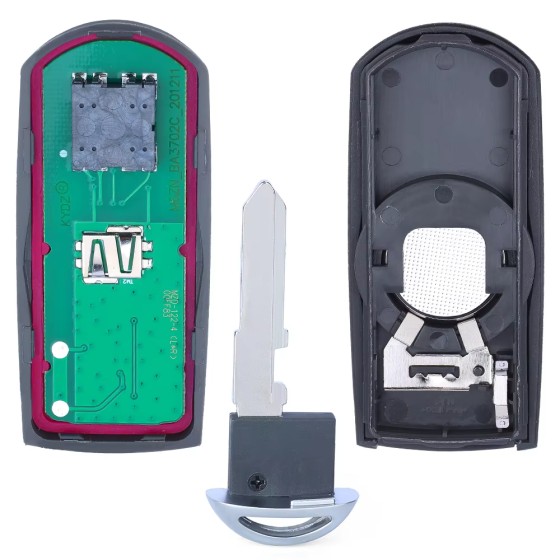
Professional Locksmith Guide to Key Fob Replacement
Author: Legacy Locksmith
Release time: 2026-04-24 02:27:05
View number: 1
Professional Locksmith Guide to Key Fob Replacement
Key fobs (remote keyless entry transmitters) represent one of the most common service requests locksmiths encounter. Understanding when to repair versus replace key fobs helps you serve customers effectively while maintaining profitable margins.
Understanding Key Fob Technology
Key fobs use radio frequency (RF) transmission to communicate with the vehicle's receiver. When a button is pressed, the fob transmits a coded signal that the vehicle's security system recognizes and responds to accordingly.
Most automotive key fobs operate at 315 MHz (North America, Japan) or 433 MHz (Europe, Asia). Using a fob with the wrong frequency will not work with the vehicle regardless of any other compatibility.
Modern key fobs often incorporate the transponder chip into the same housing as the RF transmitter. This integrated design combines keyless entry with engine starting capability in a single device.
Key Fob Diagnostic Procedures
Before recommending replacement, perform systematic diagnostics to determine whether the fob can be repaired or must be replaced. Many fob issues have simple solutions that avoid the cost of full replacement.
Battery testing represents the first diagnostic step. Most key fobs use CR2032 or CR1620 coin cell batteries. Test the battery voltage with a multimeter. A fresh CR2032 should read approximately 3.0-3.3 volts. Anything below 2.8 volts should be replaced.
Physical inspection reveals issues that batteries cannot address. Check the fob case for cracks that allow moisture intrusion. Inspect the button contacts for wear or damage. Look for signs of liquid damage (corrosion, white residue) inside the case.
Signal testing confirms whether the fob is transmitting properly. Use a radio frequency detector or test the fob at the vehicle within its normal operating range. If the vehicle does not respond even at close proximity, the transmitter may be failed.
Common Key Fob Problems and Solutions
Problem: Intermittent operation
Solution: Replace the battery first in most cases. If the problem persists, open the fob and clean the battery contacts with isopropyl alcohol. Verify the battery is properly seated with correct polarity.
Problem: Complete non-response
Solution: Verify the battery is good and properly installed. If the fob still does not work, try a spare fob at the vehicle (if available) to determine whether the problem is the fob or the vehicle's receiver. If the spare works, the original fob requires replacement.
Problem: Buttons work but range is severely reduced
Solution: Replace the battery first. If the problem persists, the transmitter may be weakening. Recommend replacement before the fob fails completely.
Problem: Buttons stick or do not depress properly
Solution: Clean around the buttons with compressed air. Remove debris that may be preventing proper button travel. If buttons remain sticky, the fob case may be damaged and replacement is warranted.
Problem: Fob was dropped in water
Solution: Immediately remove the battery and dry the fob completely. Do not install a new battery until all moisture has evaporated. If the fob does not work after thorough drying, replacement is necessary.
Battery Replacement Best Practices
Battery replacement represents the most common key fob service. Performing this service correctly keeps customers satisfied and generates repeat business.
Use quality batteries from reputable manufacturers. Cheap batteries leak more readily and provide shorter life. The small additional cost of quality batteries prevents callbacks from battery leakage damage.
Clean the battery contacts before installing the new battery. Residual moisture or corrosion can prevent proper contact even with a fresh battery.
Verify the battery polarity before closing the fob. Installing a battery backwards will prevent operation and may damage the fob's circuitry.
When to Recommend Full Replacement
Some situations require full key fob replacement rather than repair or battery service.
Physical damage to the circuit board or antenna requires replacement. Cracked circuit boards, broken solder joints, or damaged antennas cannot be reliably repaired.
Water damage often causes corrosion that progresses over time even after the fob appears to work. Recommend replacement for any fob that has been submerged or exposed to significant liquid.
Failed transponder chips require replacement of the entire fob assembly. Transponder chips cannot be individually replaced and are mated to the specific fob circuitry.
Security concerns may warrant replacement. If a customer's fob was lost and there is any chance it could be used to access the vehicle, recommend replacement of all fobs and reprogramming for security.
Key Fob Programming After Replacement
Most replacement key fobs require programming to the vehicle before they will function. Understand which vehicles allow owner programming versus which require professional equipment.
Many older vehicles (2000s) allow owner programming with specific procedures. These procedures typically involve inserting a key into the ignition and cycling it while pressing buttons on the fob in a specific sequence.
Modern vehicles require professional programming equipment. The encryption used in current key fobs prevents owner programming and requires specialized tools that locksmiths use.
Always verify the replacement fob is compatible with the specific vehicle before recommending purchase. Using an incompatible fob will result in programming failure regardless of equipment used.
Programming procedures vary by manufacturer and model year. Quality programming equipment handles these variations automatically when properly configured.
Wholesale Key Fob Inventory for Locksmiths
Building an efficient key fob inventory requires balancing coverage breadth against capital requirements. Focus on high-velocity items while maintaining access to specialty fobs through wholesale partners.
High-velocity fobs include those for best-selling vehicles in your market. Analyze your service history to identify which fobs you need most frequently. Stock these items in adequate quantities to avoid stockouts.
Mid-velocity fobs can be ordered as needed rather than kept in stock. Establish relationships with wholesale suppliers who offer quick turnaround on specialty items.
We supply all major key fob replacement units at competitive wholesale prices. Our inventory covers domestic and import vehicles with both OEM-quality and aftermarket-compatible options. Both USA and China warehouses ship within 1-2 business days. Contact our technical support team for help identifying the correct key fob for your customer's vehicle.
Questions and Answers
Q: How do I know if a key fob needs battery replacement or full replacement?
A: Test the battery first. If the fob still does not work after replacing with a fresh battery, or if physical damage, water damage, or failed buttons are present, full replacement is needed.
Q: What battery does a key fob use?
A: Most key fobs use CR2032 or CR1620 coin cell batteries. Check your specific fob model to confirm the correct battery type before replacement.
Q: Can I replace just the battery or should I recommend full replacement?
A: Replace the battery if it is weak or dead, the fob case is intact, and buttons work properly. Recommend full replacement if there is physical damage, water damage, or the fob is old and showing multiple failure signs.
Q: Why does my customer's new key fob not work even after programming?
A: Common reasons include incompatible fob model (wrong frequency or encryption), programming failure due to low battery or timing issues, or the vehicle's receiver has failed. Verify compatibility and retest the procedure.
Q: How long do key fob batteries typically last?
A: Most key fob batteries last 1-3 years depending on usage frequency and battery quality. Advise customers to replace preventively every 2 years or at the first sign of reduced range.