


-560x560.jpg)
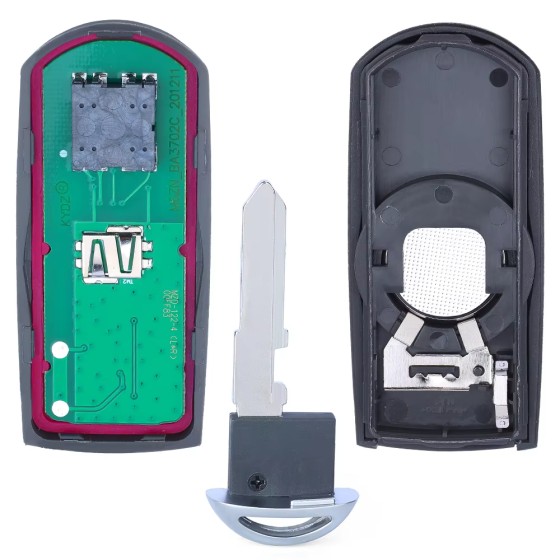
Hyundai and Kia Remote Key Replacement Guide
Author: Legacy Locksmith
Release time: 2026-04-24 02:11:13
View number: 2
Hyundai and Kia Remote Key Replacement Guide
Hyundai and Kia have dramatically increased their presence in the American market over the past fifteen years. This growth means locksmiths increasingly encounter these vehicles in their daily work. Understanding Hyundai and Kia remote key systems helps you serve these customers efficiently.
Understanding Hyundai and Kia Key Systems
Both Hyundai and Kia use similar key systems across their model lineups, often sharing platforms and components. This commonality simplifies inventory management for locksmiths who service both brands.
Earlier Hyundai and Kia vehicles used standard transponder keys with relatively straightforward programming procedures. These keys can be programmed using aftermarket equipment without requiring dealer involvement in most cases.
Current models use enhanced security with encrypted transponders. While more secure, these systems often require specialized programming approaches that may exceed standard aftermarket equipment capabilities.
Hyundai Sonata Remote Keys (2006-2020)
The Sonata is one of Hyundai's best-selling sedans, making Sonata key replacement a common service request. Understanding the key types for each generation prevents ordering the wrong part.
Model years 2006-2009 use a standard transponder key with a separate remote fob. The key blade uses a standard HI tag or equivalent blank. Programming follows standard procedures when one working key is available.
Model years 2010-2014 transitioned to an integrated remote head key design. The remote buttons are built into the plastic cover surrounding the metal blade. These keys use the standard transponder system and program like other domestic-style keys.
Model years 2015-2020 use the enhanced security system with encrypted transponder. These keys require programming equipment capable of handling the newer encryption protocols.
Hyundai Elantra Remote Keys (2007-2020)
The Elantra represents Hyundai's compact sedan entry and shares key components with other Hyundai products. The Elantra's popularity means consistent key replacement demand.
Model years 2007-2011 use the standard transponder system with integrated remote head key. The programming procedure follows the standard Hyundai sequence using available master keys.
Model years 2012-2016 transitioned to the enhanced transponder system. Some models in this range allow owner programming with specific procedures documented in the owner's manual.
Model years 2017-2020 predominantly use the encrypted transponder system that requires professional programming equipment.
Hyundai Tucson and Santa Fe Remote Keys (2010-2020)
These utility vehicles represent Hyundai's crossover and SUV offerings. Their key systems parallel other Hyundai models with similar generation-based transitions.
The Tucson uses the integrated remote head key design common across the Hyundai lineup. Key replacement follows standard procedures for the applicable model year.
The Santa Fe uses similar key designs but may require different part numbers depending on the specific model year and trim level. Always verify the FCC ID when ordering replacement keys.
【T2】Kia Optima Remote Keys (2004-2020)
The Optima is Kia's mid-size sedan and shares platform components with the Hyundai Sonata. This relationship often means shared key components between the two models.
Model years 2004-2010 use the standard transponder key with separate remote fob. The programming procedure follows standard Hyundai/Kia procedures.
Model years 2011-2015 transitioned to the integrated remote head key design. These keys directly replace the original equipment key with standard programming.
Model years 2016-2020 use the enhanced encrypted transponder system. Programming requires equipment capable of handling the newer security protocols.
Kia Sportage and Sorento Remote Keys (2011-2020)
These SUVs represent Kia's utility vehicle lineup. Their key systems follow the same pattern as other Kia products with model-year-based transitions.
The Sportage compact SUV uses the integrated remote head key across most model years. Key replacement demand remains steady as these vehicles accumulate age.
The Sorento mid-size SUV similarly uses the integrated key design with programming procedures matching other Kia products.
Common Hyundai and Kia Key Part Numbers
Hyundai uses various part numbers across generations. The specific number matters less than matching the FCC ID and frequency specifications. Common formats include the 955-2-series for earlier models and newer part numbers for current applications.
Kia uses similar part number conventions. The 955 prefix appears on many Kia remote keys across different model years and applications.
Programming Procedures for Hyundai and Kia Keys
Standard Hyundai and Kia transponder keys can be programmed using procedures similar to other Asian brands. The exact sequence varies slightly between generations but follows common patterns.
For vehicles with standard transponders, programming typically requires one working master key. Insert the working key and turn to the On position (not starting the engine). The security light will illuminate. Within a specific time window, turn to Off and insert the new key. The security light will turn off, indicating successful programming.
For vehicles with encrypted transponders, the programming procedure may require extended ignition-on times or specific sequences that vary by model year. Quality programming equipment handles these variations automatically when properly configured.
Troubleshooting Hyundai and Kia Key Issues
Several issues commonly affect Hyundai and Kia key programming. Addressing these efficiently improves your first-call completion rate for these vehicles.
Battery voltage affects programming procedures significantly. The vehicle battery must maintain adequate charge throughout the programming sequence. Low voltage causes the security module to reject the programming attempt.
Using the correct key frequency matters for these Korean brands. Hyundai and Kia typically use 315 MHz for North American vehicles. Ordering a key with the wrong frequency will result in the remote function not working even if the transponder programs correctly.
Aftermarket equipment limitations may prevent programming certain newer model keys. If your equipment does not support the specific encryption used by a vehicle, the job may require dealer referral.
Wholesale Hyundai and Kia Remote Keys
We supply Hyundai and Kia remote keys at competitive wholesale prices. Our inventory covers most Hyundai and Kia models from 2000-2020. Both USA and China warehouses ship within 1-2 business days. All remote keys include a 1-year warranty. Contact our technical support team to confirm the correct key for your customer's specific vehicle.
Questions and Answers
Q: What is the most common Hyundai remote key part number?
A: The 955-2-series covers most Hyundai applications from the 2000s. For 2015+ models, specific part numbers vary by vehicle. Always verify the FCC ID to ensure compatibility.
Q: Can I program a Hyundai key without a working key?
A: For most Hyundai vehicles with standard transponders, you need at least one working master key. For newer models with encrypted transponders, dealer involvement may be required when all keys are lost.
Q: Why is my aftermarket key not working even after programming?
A: The most common reasons are incorrect frequency (315 MHz required for North America), low vehicle battery voltage, or using a key not compatible with your vehicle's specific security system.
Q: How often should I replace key fob batteries?
A: Replace key fob batteries at the first sign of reduced range or intermittent operation. Most CR2032 batteries last 1-2 years depending on usage frequency.
Q: Do Hyundai and Kia use the same key frequency?
A: Yes, both brands use 315 MHz for North American vehicles. This is important when ordering replacement keys from overseas suppliers.